



Proxy Authentication Methods Explained: Username/Password vs IP Whitelisting
06.10.2026 10 min
A proxy firewall is an added layer of security that inspects data in application layers. It filters network traffic before providing it to internal devices. This helps protect from most web threats.
Traditional packet filters might simply cache certain data packets. A proxy firewall, on the other hand, examines full packets. It detects hidden malware and suspicious code.
Many companies use a proxy firewall to avoid web exposure and improve security. To learn how a proxy firewall works, how it compares with traditional firewalls, and how you might adapt one for your networks, read on.

Proxy firewalls are among the firewalls that test network traffic at deeper application layers. Unlike other methods that rely on IP addresses and internet protocols or simpler packet filters, they review the entire text of all data packets. Proxy firewalls offer firewall functionality beyond simple packet-filtering firewalls.
They often run on specialized servers within an organization’s security systems. In this architecture, specialized servers act as intermediaries, processing requests to ensure compliance with security policies before forwarding them to internal resources. Many companies also deploy a proxy server firewall or even more firewall proxy servers. Each is set in front of internal networks to handle general usage of the internet.
This setup allows proxy firewalls to intercept user requests to web applications. It checks security rules before forwarding. Because of that, your proxy firewall can catch threats that less sophisticated screening will not. It offers an ensured secured connection point for your local machines as well as hiding your internal IP addresses. It uses deep scanning, filters, and web caching.
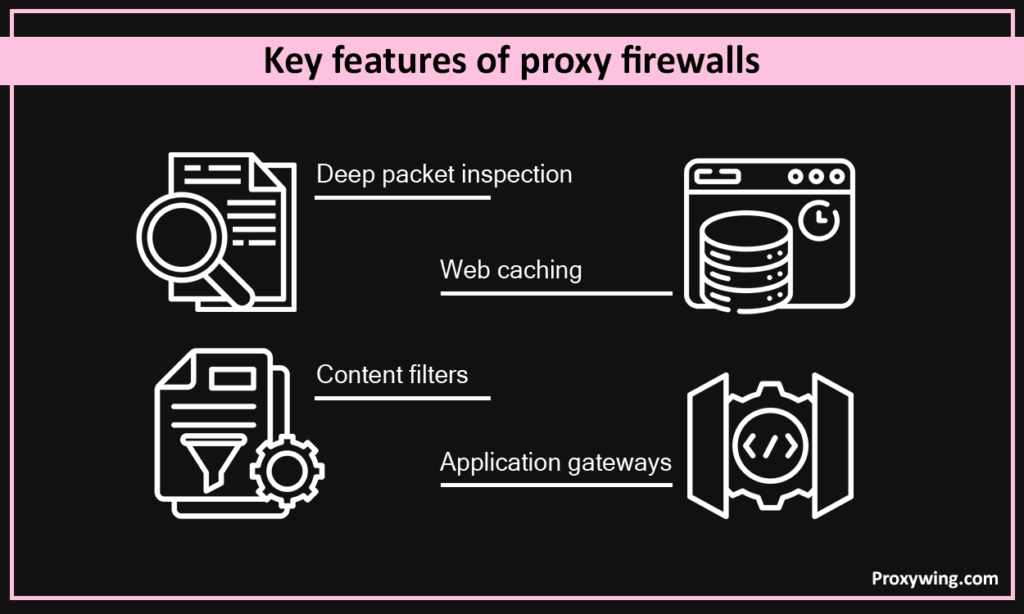
By providing those features, proxy firewalls help protect networks from advanced attacks and provide logs to audit in the future. They also add another layer of protection that organizations with greater security demands require.
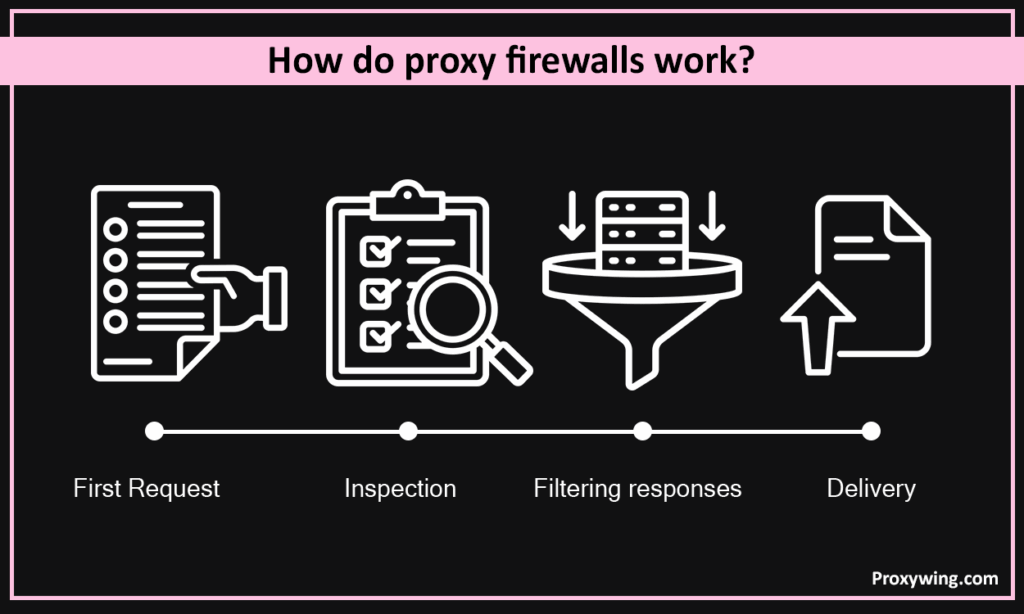
When local machines send requests to use a web application or even an online service, these requests are first sent to the proxy firewall. The firewall inspects packets at the application layers. It creates a secure connection only if the request is safe. This happens only if the requests comply with security policies. The interior machine is not directly connected with the outside internet.
Inbound and outbound connections and traffics are analyzed by proxy firewalls to prevent hidden threats from coming in through your network.

Most companies use proxy firewalls to regulate their internal network traffic and access controls. One proxy would serve all an employee’s requests with tight filters. Others use various proxies for different departments or purposes. A research laboratory, for instance, might prefer full content scanning to protect confidential data. A large retailer may use them to scan viruses or block unauthorized websites.
Others also install a firewall proxy server in every regional office. This lets them keep security rules the same everywhere. This reduces bandwidth expenses as well as accelerates day-to-day operations. Regardless of the method used, the final goal remains identical: a proxy firewall protects precious internal machines from direct connections from the outside.
Here is a concise comparison chart of proxy firewalls versus traditional firewalls. Look at how both products target security, performance, cost, and the optimal setting in which to use them.
| Security Method | Impact on Performance | Cost | Use Case |
|---|---|---|---|
| Application layer filter, conceals true IP addresses. | Can slow down traffic if not optimized; performs deep inspection of all data packets. | Typically higher due to advanced software/hardware. | Ideal for highly secure environments like finance, where detailed scanning is critical. |
| Traditional firewalls use basic IP rules and packet filters. | Faster overall; does not inspect full content at the application level. | Generally lower; off-the-shelf hardware often works. | Best for standard networks where speed matters more than deep inspection. |
The proxy firewall will more likely detect more complex attacks but is more resource-intensive. The default method is faster and simpler but misses more detailed content inspection.
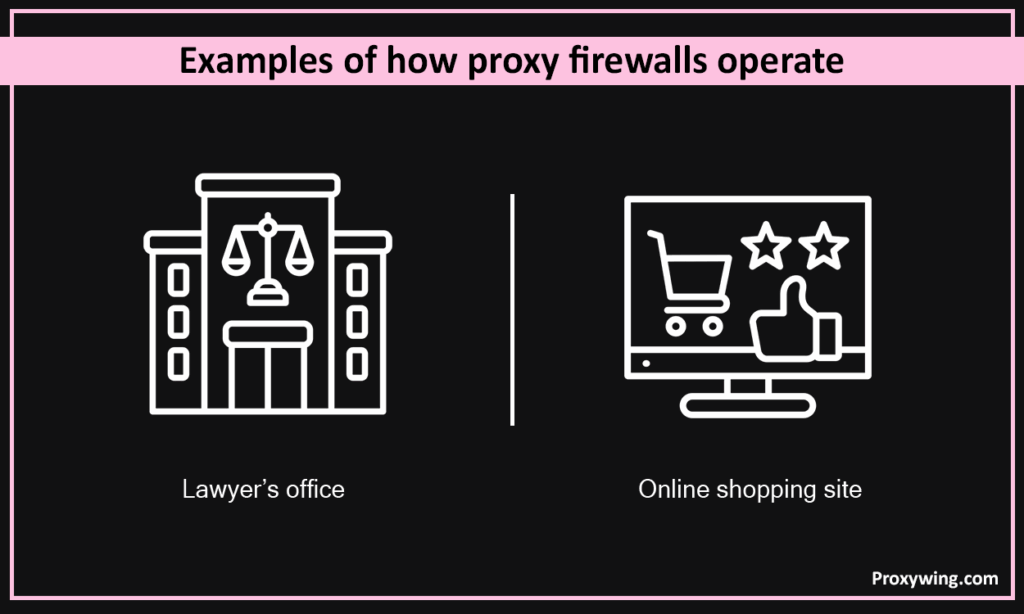
Imagine a lawyer’s office maintaining confidential client documents. It scans or filters legal briefs downloaded for bad code. When users repeatedly request access to the same huge file, it caches files for faster access.
Take an online shopping site, for instance. It might rely on proxy firewalls to capture online transactions or buyer information. It blocks access to suspicious pay URLs in their entirety.
Caching web pages or graphics also accelerates routine operations. Both are examples of how these firewalls combine security with performance gains. These firewall deployments illustrate different firewall use cases in real-world scenarios. This helps optimize overall network traffic.
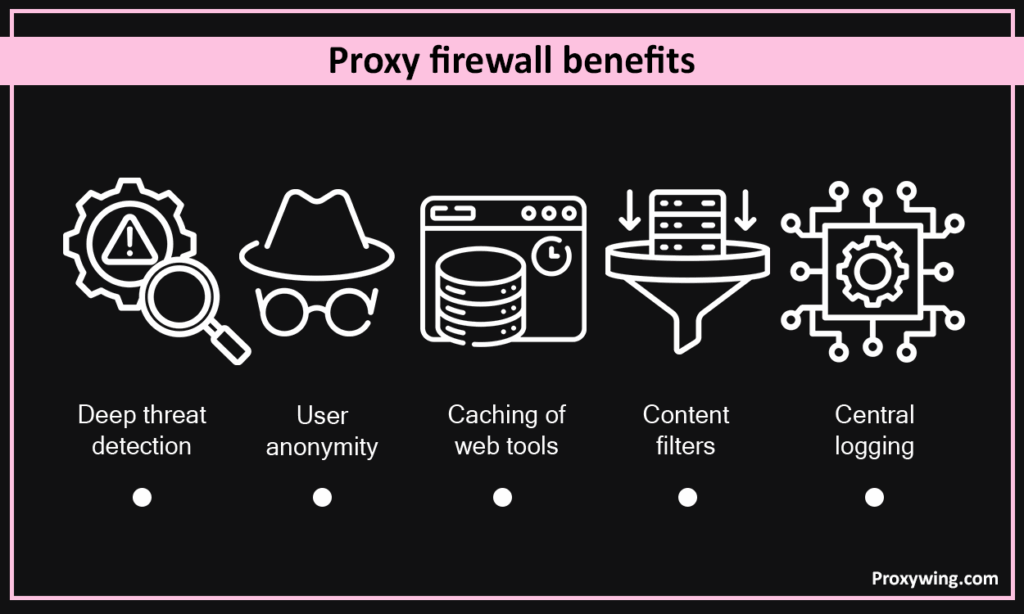
Below are some of the reasons to use a proxy firewall:
These benefits make proxy firewalls perfect for companies handling confidential data or organizations that must remain compliant. The firewall enforces standardized internet usage policies throughout the entire environment.

In addition to its benefits, a proxy firewall also possesses some potential shortcomings:
Business organizations must weigh those negatives against the greater security provided by a proxy firewall. The extra effort is worth it for stronger network security.
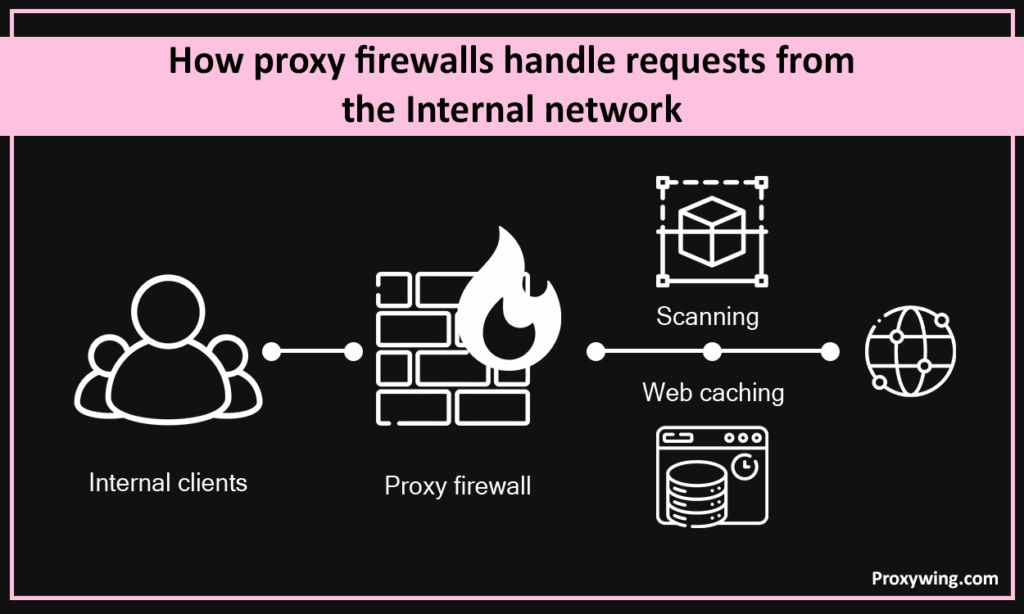
Your traffic from computers is filtered where you have implemented a proxy firewall. Your internal clients only connect to this proxy, which scans content based upon predefined scanning, access controls, and antivirus inspection. If there’s clean data, then it is allowed to be routed through.
This setup also supports caching web content. Proxy firewalls store frequently accessed web pages or documents, which reduces repeated bandwidth usage. That fosters quicker connections to end-users.
Most modern ones also handle SSL/TLS streams temporarily, scanning them for hidden threats before re-encrypting for final delivery. This step builds safer internet connections without ignoring malware, which might otherwise slip by.
A proxy firewall offers robust security through detailed examination of layers of applications to stop malicious content. It diverges from mere filtering since it also includes supplementary scanning, IP masking, content filters, and caching. It may be more expensive to purchase and fully automate Still, it’s essential in many companies. It helps protect networks and keeps internet use safe day to day.
A proxy firewall is a smart solution to rising cyber threats. It filters, logs, and protects your network from malicious traffic. Even small setups benefit and reduce misuse. It protects all critical data and services daily.
Article written by:

CEO
Founder of Proxywing. Drives growth across EU, US, and Asian markets, combining B2B strategy with a hands-on focus on product quality, 99% uptime, and responsive support.
All articles by author (64)Yes. By screening out application-layer data packets, a proxy firewall traps malicious code and prevents harmful files from entering, applying strict filtering rules to spare networks from most virus or malware attacks.
Not at all. A VPN secures users’ connections for safe remote links, while a proxy firewall monitors and sifts through traffic content at the application layers, hides internal IP addresses, and blocks hidden threats.
Yes, proxy firewalls can block applications or sites. By strict content filters and access controls, they halt unwanted requests, allowing only authorized web services through the secure network infrastructure.