

RARBG proxy: mirrors, risks & alternatives
22.10.2026 7 min
With an IP pool of over 80 million IPs in 195+ countries, Webshare is one of the leading proxy providers in 2026. Besides its success over the years, Webshare does have drawbacks that may be a dealbreaker for some users: its pool is datacenter-heavy and its residential IPs get pricier as volume grows, its geo-targeting is shallower than the leaders, and its support is ticket-based rather than live.
Those drawbacks, and several other reasons, may force some users to look for viable Webshare alternatives. In today’s guide, we explore the leading proxy providers you may consider if Webshare doesn’t meet your needs. Let’s get started!
| Provider | Best For | Proxy Types | Pool Size | Starting Price | Free Trial |
|---|---|---|---|---|---|
| ProxyWing | Best overall alternative | Residential, ISP, Datacenter, Mobile | 70M+ | $0.87/IP per month | No published trial |
| Bright Data | Enterprise scraping stack | Residential, ISP, Datacenter, Mobile | 400M+ | $1.40/IP | Yes, all proxy types |
| Oxylabs | Enterprise data collection | Residential, ISP, Mobile, Datacenter | 177M+ | $2.25/IP | Datacenter only |
| Decodo | Residential upgrade on a budget | Residential, ISP, Mobile, Datacenter | 115M+ | $0.035/IP | 3-day trial |
| SOAX | Social platforms & geo-sensitive tasks | Residential, Mobile | 191M+ | $5.00/GB | Paid 3-day trial ($1.99) |
| IPRoyal | Closest price match to Webshare proxy services | Residential, ISP, Mobile, Datacenter | 32M+ | $1.57/proxy/month | Yes, free tier |
Webshare is a legitimate proxy provider, so this guide is about matching the tool to the task, not bashing a competitor. However, like any other proxy provider, Webshare is not perfect, so it has several shortcomings. The five most common reasons users may move away from Webshare:
These are some of the reasons Webshare is still one of the leading proxy providers:
Some of Webshare’s shortcomings include:
Raw pool size matters less than how clean and fresh the IPs are. Using clean IPs significantly increases the success rate, especially when accessing strict targets. Before choosing, check the share of already-blacklisted IPs during a trial by hitting a few real targets before committing. Ensure to choose a vendor with a good reputation for offering clean proxies.
Residential proxy services suit trust-sensitive tasks, mobile suits the strictest platforms, ISP suits stable long sessions. This is the single biggest gap for users leaving a datacenter-first provider like Webshare. For a more flexible experience, we recommend choosing a provider that offers residential, mobile, ISP, and datacenter proxy servers. This flexibility allows you to choose the right option based on the task at hand.
Per-GB and per-IP models aren’t directly comparable and can lead to significantly different outcomes at the end of the month. You should also check whether unused traffic expires at month’s end, and calculate real cost against your actual usage pattern, not the headline price. You must also look at the fair use policy of the provider to get the full details of the limitations their plans have.
Even when a provider offers the best features and prices, it will all not matter if their services are frequently down. Choose a provider that offers at least 99% success rate and uptime. A published success rate and a live support channel matter once proxies sit in production. You should also consider measuring success rate yourself during a trial by running your actual target, not a generic test website.

ProxyWing is the best overall upgrade path for someone leaving a datacenter-only plan. It combines every proxy type, including mobile and residential proxies with sticky sessions and deep geo-targeting at accessible pricing. This makes it our top recommendation for most users moving off Webshare.
Key Capabilities
Visit ProxyWing.com to get started.

Bright Data is one of the best options for enterprise and other large scale users. It offers the largest pool on the market, ASN and city-level targeting, and a full web scraping stack. This makes it strong for teams outgrowing a budget provider entirely, though it comes at a premium price.
Key Capabilities

Oxylabs is another premium, compliance-focused provider built for teams that need broad coverage and managed anti-bot tooling for more than a cheap entry price. It is a great option for users looking to upgrade to a provider with a significantly large IP pool and coverage.
Key Capabilities

Decodo is the closest match on price for someone leaving Webshare but needing real home-based IPs, with flexible plans and a usable dashboard for small teams.
Key Capabilities

SOAX is another great alternative. It offers granular city and ASN targeting with flexible rotation intervals, strong for social platforms and geo-sensitive tasks.
Key Capabilities

IPRoyal is one of the closest alternatives for users who picked Webshare purely on price, with pay as you go traffic that never expires. Yes, it may not offer the largest IP pool, but it does give users the flexibility to choose a proxy type that suits their exact needs.
Key Capabilities

NetNut is another proxy provider that you would have considered if you were looking for an alternative a couple of months ago. However, its proxy network was seized by the FBI and Google in July 2026 over ties to a botnet. It is currently unavailable, so you’ll want to choose from the other Webshare options covered in this guide instead.
| Provider | Residential Price (per GB) | Documented Success Rate |
|---|---|---|
| ProxyWing | ~$2.50/GB | Up to 99% success rate and uptime |
| Bright Data | ~$8.40/GB | Up to 99.95% success rate and 99.99% uptime |
| Oxylabs | ~$4.00/GB | 99.95% success rate and 99.9% uptime |
| Decodo | ~$1.50–4.00/GB | Up to 99.99% uptime and 99.7% success rate |
| SOAX | $5.00/GB | Up to 99.95% success rate and 99.9% uptime |
| IPRoyal | ~$1.75/GB | Up to 99.4% success rate and 99.9% uptime |
| Webshare | ~$2.99/GB | Up to 99.7% success rate and 99.98% uptime |
If you’re ready to move to another proxy provider, these are the key steps to follow:
Pull your full proxy list and note the authentication method (IP-whitelist vs. username/password), plus every script and profile that references your current credentials.
Don’t remove your existing config first. Add the new provider as a secondary endpoint in staging. This will likely be a one-line change in most tools, including Scrapy, Puppeteer, and Selenium.
Run both providers in parallel for a few days on your actual targets. This test allows you to compare success rate, block rate, and latency side by side. It only makes sense to switch to a provider that offers better performance and reliability.
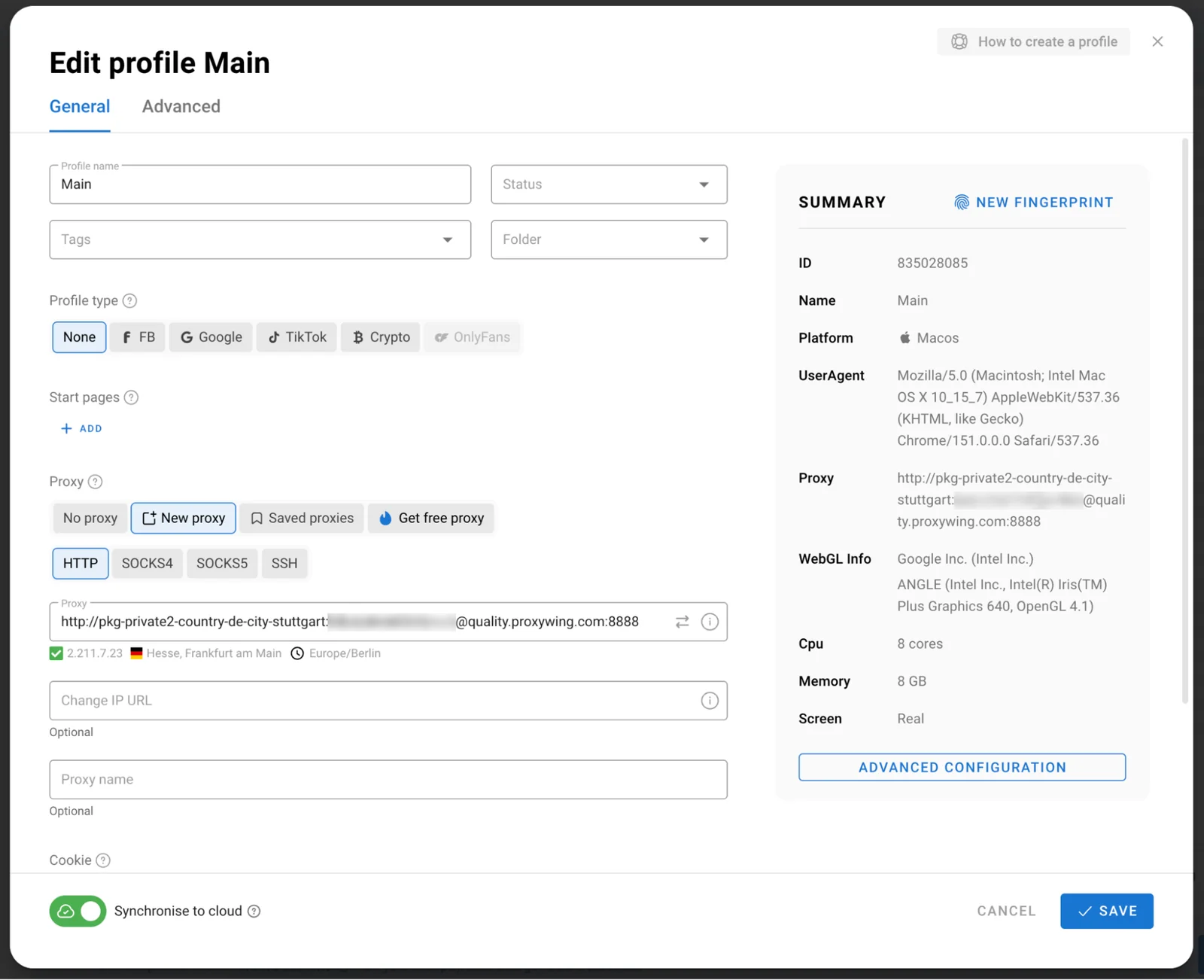
Once you’ve chosen a provider, update the details, including hostname, port, username, and password across every script and profile. As shown in the screenshot above, we swapped in a fresh proxy string pointed at a different location entirely (Stuttgart, Germany) to confirm the new provider was fully in place, not just reusing the old config.
Sticky-session syntax also varies by provider, so confirm the new format rather than assuming it matches. Our German proxy string above omits a session ID, meaning it rotates rather than holding one fixed IP.
If switching to IP-authentication, whitelist your server and office IPs first, or requests will silently fail. This step is not necessary if you are using username/password for authentication.
Country and city targeting formats differ by provider. After the migration, remember to verify the location you request is what you actually receive. Most importantly, you need to ensure the locations you intend to target are supported by the new provider you are migrating to.
Run both for a few days after cutover before decommissioning the old one. This allows you to do a full comparison of all the key metrics and to ensure all the data from the previous provider was moved over correctly. You should only decommission Webshare after confirming that everything works fine with your new provider.
Compare actual spend during overlap against advertised pricing: headline rates and real usage don’t always match. Your new provider vs Webshare review for costs allows you to learn about how much more or less you will spend when you finally make the migration.
Even though all providers may seem to be having several capabilities that are similar, they do have a few differentiating factors that may suit different use cases:
Article written by:

Product & Support Operations Lead
Built Proxywing's support department from scratch — documented workflows, clear escalations, consistent quality. Now bridges the CEO and engineering, keeping infrastructure projects on track.
All articles by author (69)For low-risk datacenter scraping and budget testing, yes. For trust-sensitive tasks, its datacenter-heavy pool becomes a real limitation for many users.
ProxyWing is one of the cheapest options, with pay-as-you-go pricing and non-expiring traffic that closely matches Webshare’s budget positioning while adding residential and mobile options.
Bright Data, with 400M+ IPs and the deepest ASN and city-level targeting on the market. If your project needs a large pool of home-based IPs, Bright Data is your best bet. ProxyWing is also a good choice for the relatively high success rate of its static and rotating residential IPs, especially when handling strict targets.
Most offer some form of trial and free proxy trial. Bright Data and IPRoyal offer free trials, Decodo and SOAX offer short paid or time-limited trials, and Oxylabs offers a free datacenter-only tier. ProxyWing also has a money-back guarantee that you can take advantage of if you don’t get the experience you expect from their services.
Not if you migrate in stages: update credentials and endpoints, re-whitelist IPs, and test on a small share of traffic before a full cutover.