



Why You’re Getting Banned Even With a Cloak: 7 Proxy Setup Mistakes That Burn Your Accounts
05.10.2026 9 min
We are living in times where data is the most valuable resource, and ensuring your data is safe has never been more important. One of the most effective ways to ensure data privacy, especially when using the internet, is through using a private proxy. When using a private proxy, your IP address is hidden from any services you are using online, making it almost impossible to track your browsing activities.
Of course, there are other solutions most people use, like VPNs. Yes, VPNs do give you the privacy you need when browsing, but usually at the expense of performance. If you want to stay private online but still maintain the same browsing speeds, then using private proxy servers is your best bet. If you are reading this and not yet sure whether using a private proxy is worth it, this review article is for you. In this article, we will explore all the information you need to know about private proxies, including the key benefits, how they work, best use cases, and more. We will kick things off by looking at the basics of private proxies.
A private proxy refers to a proxy type that offers users dedicated IPs. That means every user utilizing these proxies has their own IP or, in some cases, more than one IP. But the key point behind private proxies, unlike public proxy solutions, is that IP addresses are not shared—each IP is for one user. This approach helps to significantly improve privacy without necessarily affecting the browsing speeds—which makes it the ideal privacy solution for many users.
Proxies act as intermediaries between your connection and the website or online services you are trying to access. That means when you try to access a website like google.com, your connection will first go through the proxy before being sent to google. In the end, the website you are accessing will not see your device IP address, but that of the proxy server.
With a private proxy, the IP address of the proxy server is dedicated to you. Not sharing this IP means faster connections and of course more privacy. Please note that using a private proxy in itself might not boost speeds. If a provider of these services offers access to several IPs, users can even experience more privacy by automatically switching between these addresses.
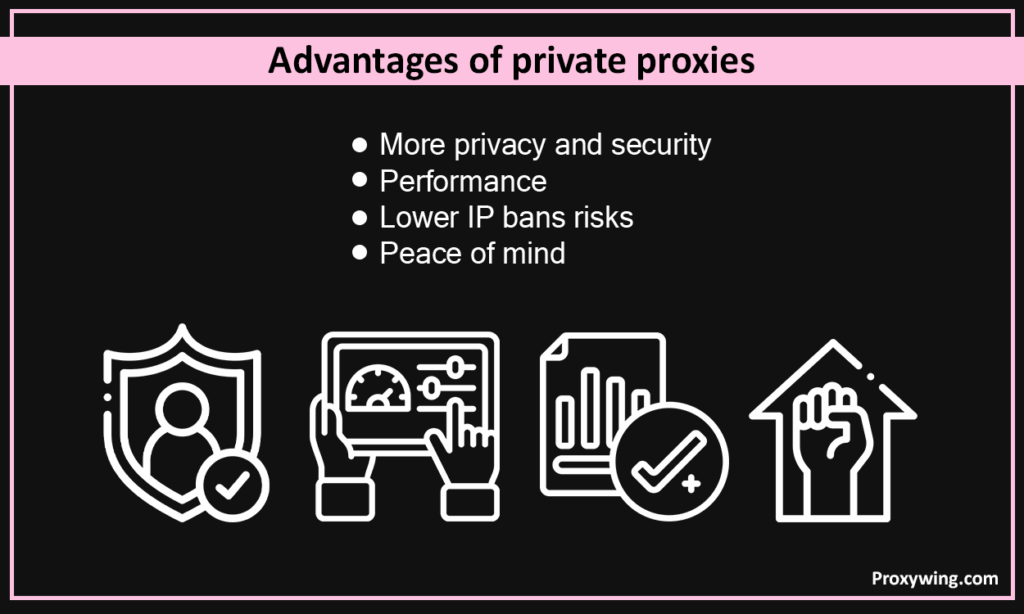
There are several reasons why you may want to use a private proxy. Here are some compelling ones that many might care about:
We will break down these into individual and business uses cases:
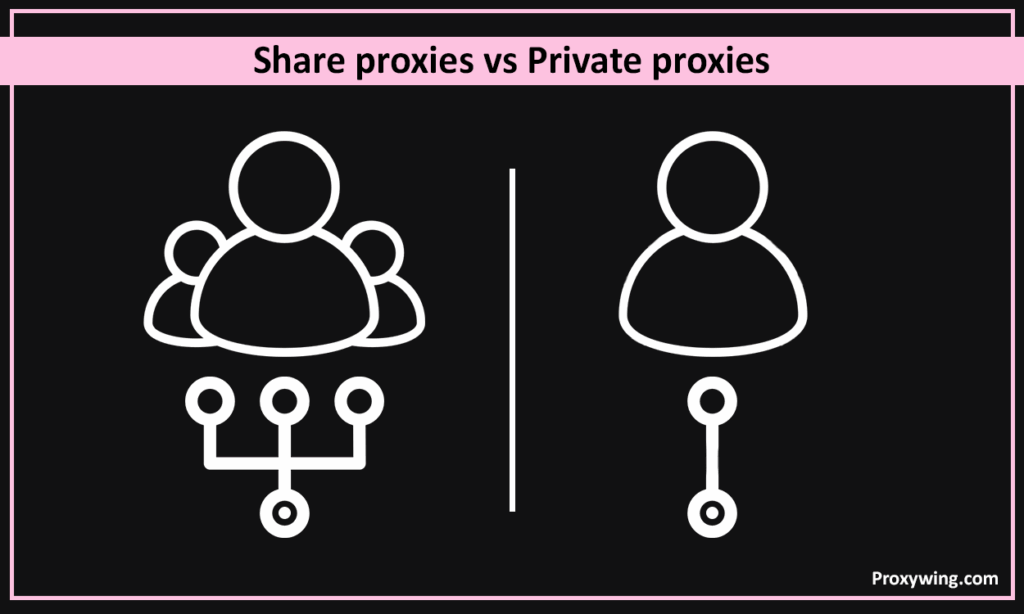
| Feature | Shared Proxies | Private Proxies |
| Performance | Shared proxies are slow since many users have to share the same IP address. | Since private proxies offer dedicated IP addresses to each user, performance is much better. |
| Privacy and control | Shared proxies hide your IP from the sites you access, but they are not as private since that same IP is being utilized by other users. As a user, you also have limited control how others may use the IP address | Private proxies offer the most privacy as each user has their own IP address, so they have more control on how they use it. |
| Pros | CheaperMore accessible | More privacyMore control on how IP address is usedFaster speedsLess risks of IP bans |
| Cons | More risk of IP bansSlow speedsNot as private | More expensive |
Some of the key factors to keep at the back of your mind include:
Private proxies are the ultimate solution for privacy, especially for those that care about performance. Since they offer you a dedicated IP address, you’re sure that your browsing is not linked to anyone else, which can keep you safe from IP bans. Yes, private proxies could be slightly more expensive than shared ones, but the benefits you get are worth the extra cost.
Article written by:

CEO
Founder of Proxywing. Drives growth across EU, US, and Asian markets, combining B2B strategy with a hands-on focus on product quality, 99% uptime, and responsive support.
All articles by author (63)